Key Takeaways
- Polished AI responses can still be weak if activities, assessments, and prerequisites are not tightly aligned to the standard.
- A stronger prompt defines an expert role, clear objective, context variables, and five planning components.
- Gemini 3.1 Pro Preview was the most classroom-ready in the comparison, while Minimax M3 was especially strong conceptually.
- Guided AI assistants can reduce prompt-management work by gathering classroom context progressively.
Table of Contents
- Introduction
- The Core Problem: Polished Output Is Not Always Useful
- The Prompt Transformation: From General Request to Defined Process
- Why the Structure Works
- What Has Been Improved?
- Comparing Three AI Approaches
- From Optimized Prompts to Intelligent Assistants
- Final Thoughts: Make AI a Thinking Partner
Introduction
Standards alignment often appears straightforward—until a dense performance expectation needs to become teachable goals, meaningful learning experiences, and credible evidence of mastery.
That work requires more than listing vocabulary and suggesting a few activities. You need to identify what learners must know, what they must be able to do, which foundations need to be in place first, and how an assessment can demonstrate the performance the standard actually requires.
Many AI requests begin with a simple instruction: break down these standards and suggest activities. The output may look polished while remaining difficult to apply. Activities can be engaging but weakly aligned. Assessments may feel generic. Prerequisites may be overlooked. Most importantly, the response can blur the difference between learning about a concept and performing the practice demanded by the standard.
A better result begins with a better workflow. By defining an expert role, clarifying the instructional context, and separating the planning task into explicit analytical components, AI can produce guidance that is more measurable, actionable, and rigorous.
The Core Problem: Polished Output Is Not Always Useful
AI is highly capable of producing fluent curriculum language. Fluency, however, is not the same as instructional fidelity.
A standards map must preserve the relationship between three things:
- The standard: the knowledge and performance students are expected to demonstrate.
- The learning experience: the practice that gives students an opportunity to build toward that performance.
- The evidence: the assessment product or observation that demonstrates mastery.
When any one of these elements is disconnected, planning becomes less reliable. A creative model-building task, for example, may help introduce a scientific concept, but it cannot substitute for an investigation if the standard requires students to conduct an investigation and use evidence.
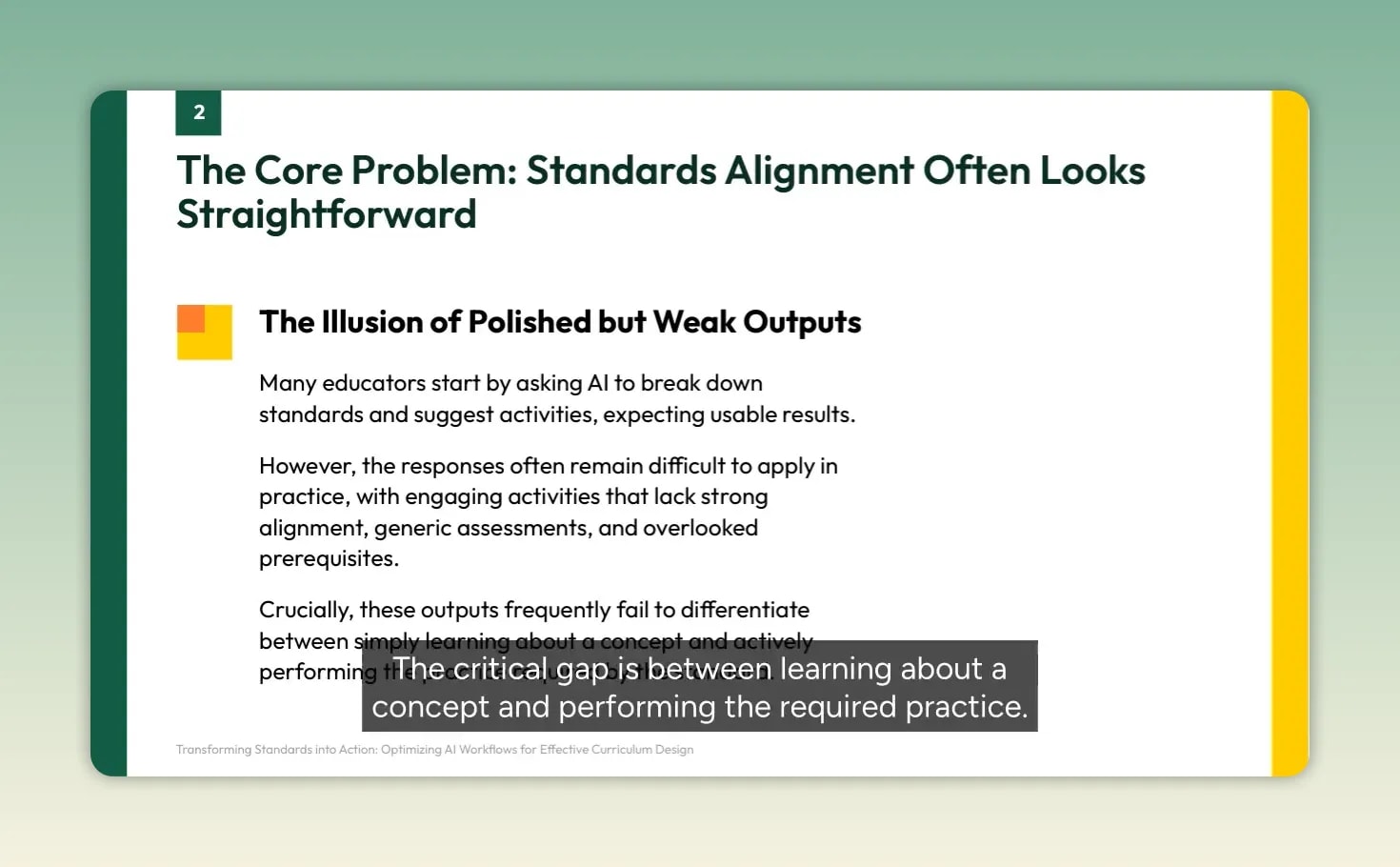
The goal is not to make AI write more. It is to make the request reflect the real decisions involved in curriculum design.
The Prompt Transformation: From General Request to Defined Process
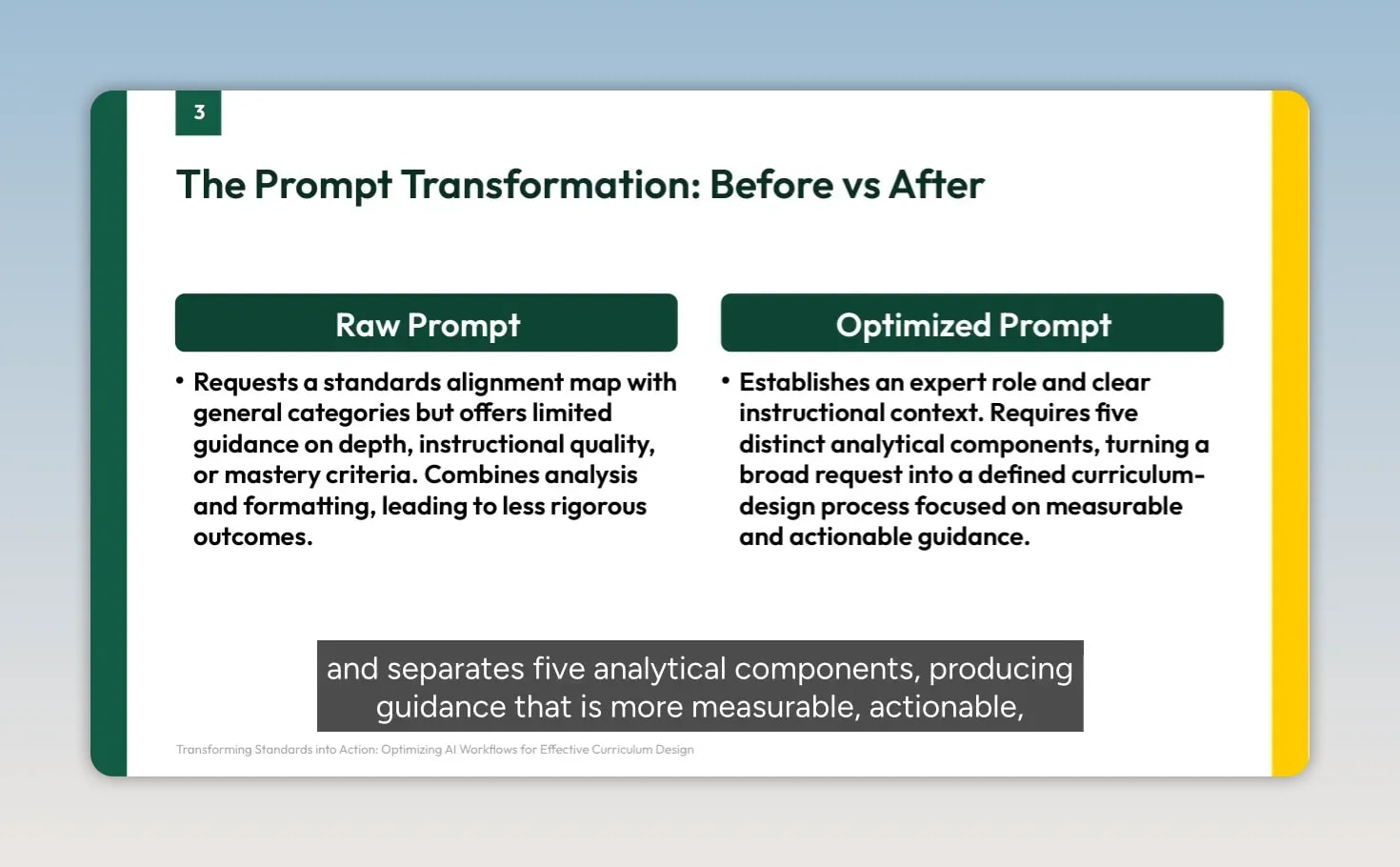
A raw standards-alignment prompt often contains the right broad intentions: identify skills, recommend activities, suggest assessments, note prerequisites, and make cross-curricular connections.
Its weakness is that it leaves several important questions unanswered. How detailed should the analysis be? What makes an activity aligned? What constitutes evidence of mastery? How should subject, grade level, and standards framework influence the response?
An optimized prompt answers those questions through structure. It establishes:
- An expert role to define the professional lens.
- A clear objective to specify the intended planning product.
- Labeled variables for subject, grade level, and standards.
- Five analytical categories that make the work repeatable.
A Reusable Standards-Alignment Prompt
You are an expert curriculum designer and instructional specialist.

Develop a detailed standards alignment map for the following context:
- Subject: [SUBJECT]
- Grade level: [GRADE LEVEL]
- Standards: [LIST STANDARDS]

For each standard, provide:
1. A measurable knowledge and skills breakdown
2. Two to three aligned learning activities
3. Varied assessment methods that verify mastery
4. Required prerequisite knowledge and skills
5. Meaningful cross-curricular connections

Ensure activities and assessments match the performance required
by the standard, not only its topic.
This framework does not eliminate professional judgment. It gives that judgment a stronger starting point by making expectations visible before the model begins generating ideas.
Why the Structure Works
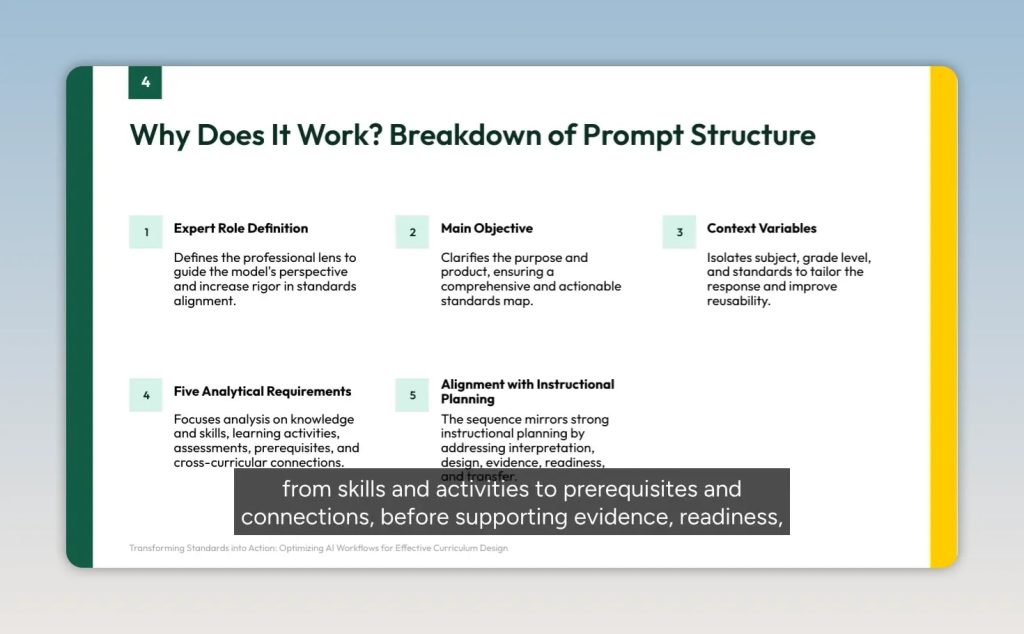
Prompt optimization works because each part addresses a different instructional planning need. Together, the pieces create a pathway from interpretation to application, readiness, and transfer.
1. Define the Expert Role
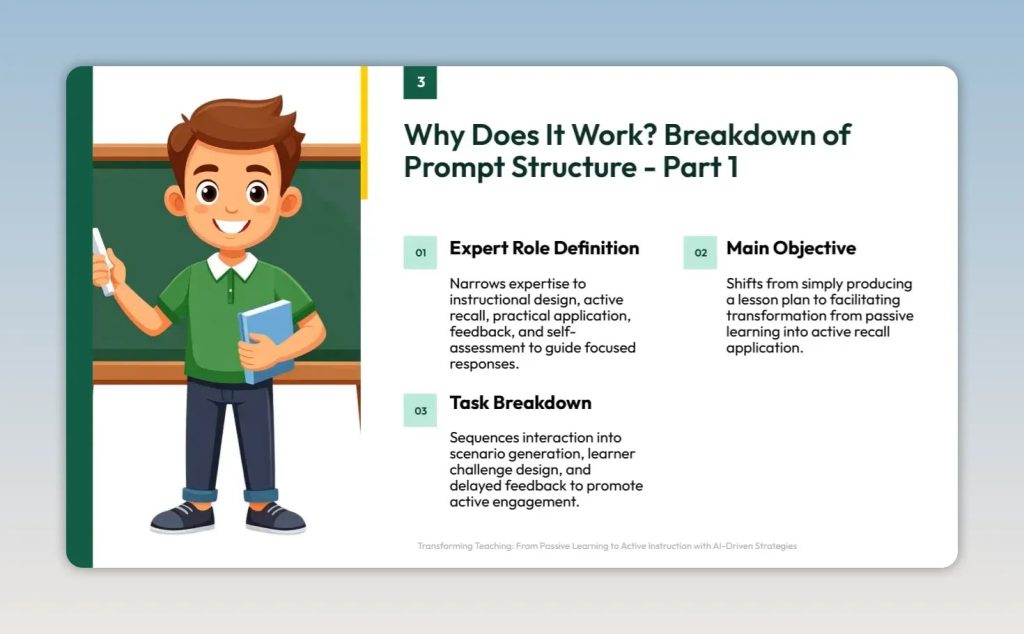
Standards alignment is not simply summarization. It requires attention to content, pedagogy, assessment, sequencing, and transfer. Assigning an expert curriculum-design role signals that the response should apply this broader professional perspective rather than offer an unfocused brainstorm.
2. State the Product and Objective
Requesting a “standards map” is useful, but defining it as a comprehensive, actionable instructional resource raises the standard for the output. The task becomes systematic deconstruction of the standard—not a restatement of its wording.
3. Isolate the Context Variables
Clearly labeled variables for subject, grade level, and standards make the prompt adaptable. They also reduce ambiguity. A useful Grade 4 literacy activity may be wholly inappropriate for high school mathematics, even if both are described as “standards-aligned.”
4. Require the Five Analytical Components
The five categories ensure that no major planning dimension is treated as an afterthought:
- Knowledge and skills: What must learners understand and be able to demonstrate?
- Learning activities: What experiences let them practice the required thinking or performance?
- Assessment methods: What evidence would genuinely verify mastery?
- Prerequisites: What foundations must be present before instruction begins?
- Cross-curricular connections: Where can the learning transfer meaningfully?
This sequence mirrors sound backward design: clarify the destination, design evidence, then plan experiences that prepare learners to succeed.
What Has Been Improved?
The most important improvement is not simply more detail. It is a clearer relationship between standards, learning experiences, and evidence of mastery.
An expert role provides the lens. A stated objective identifies the product. Reusable variables make the process adaptable. The five-part structure creates completeness. Together, these elements reduce the likelihood of receiving an attractive but generic planning document.
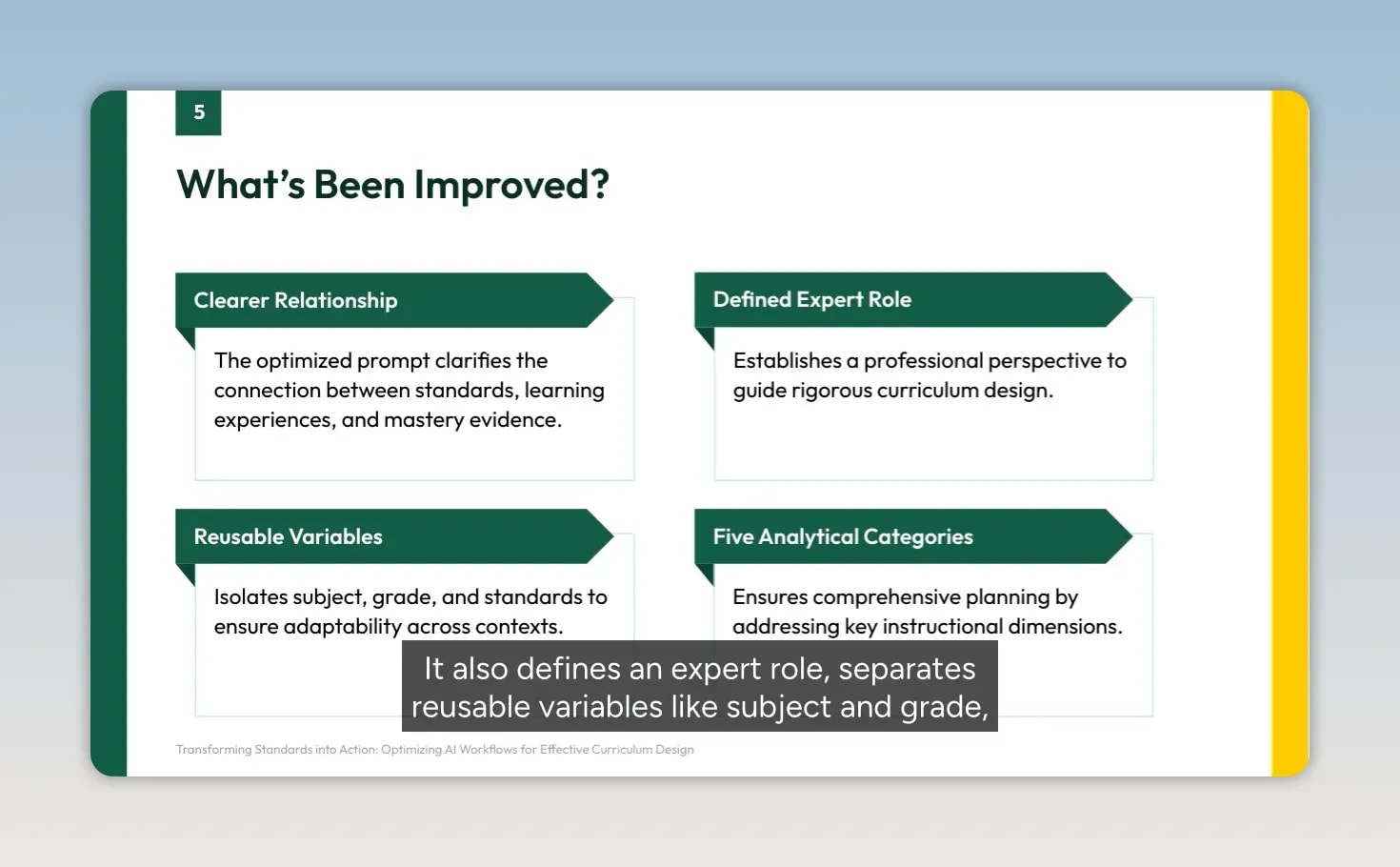
It also becomes easier to evaluate the AI response. Instead of asking whether it “looks good,” ask whether the activities match the performance verb, whether the assessment captures the required evidence, and whether the prerequisites are sufficient for access.
Comparing Three AI Approaches
Prompt structure improves results across models, but models can still make different planning choices. In this comparison, Claude Sonnet 4.6 emphasized engaging activities and varied instructional strategies, although alignment could be uneven.
Gemini 3.1 Pro Preview offered the most classroom-ready detail, concrete examples, and balanced implementation guidance. Minimax M3 favored concise organization, evidence, and scientific argumentation.
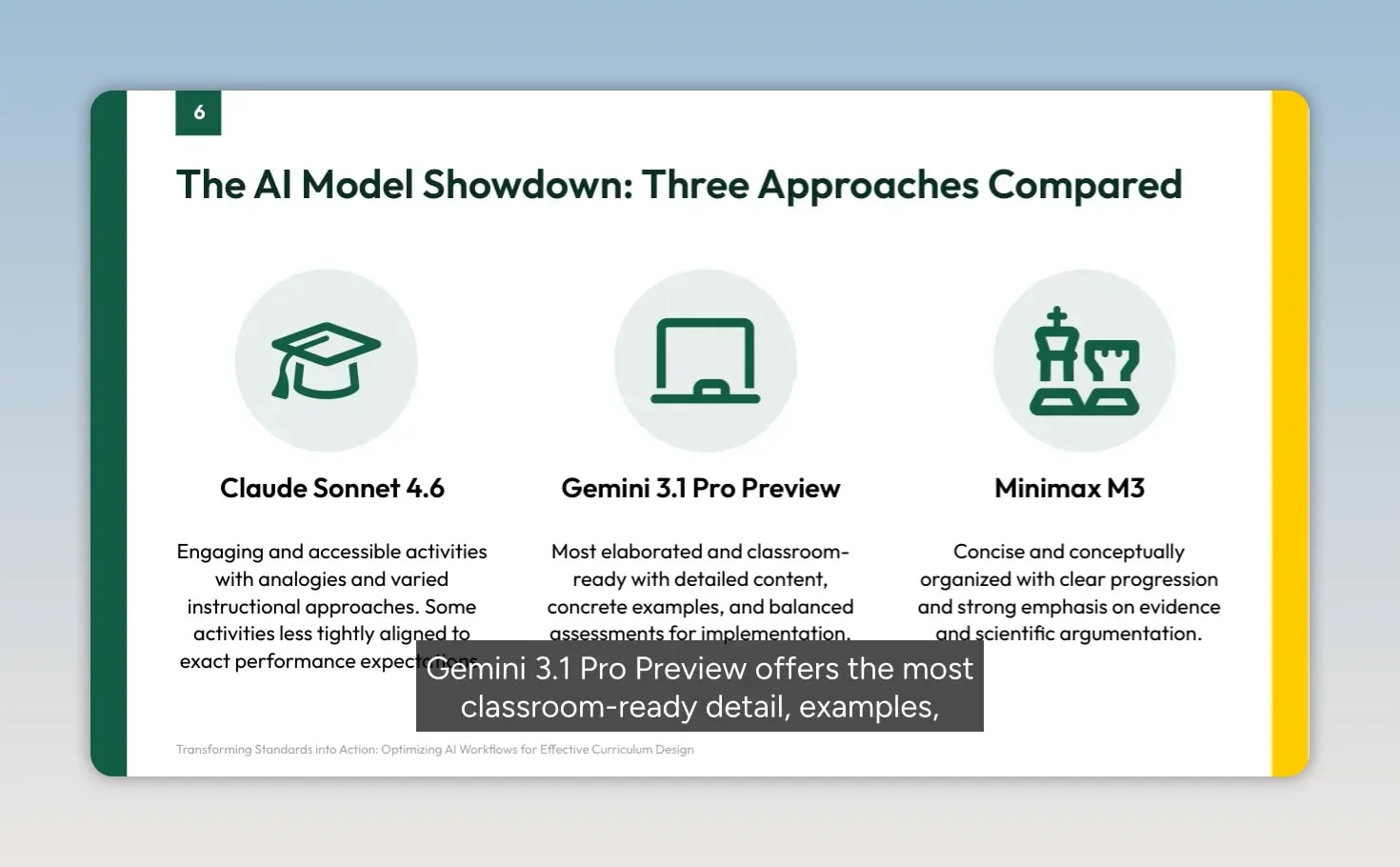
All three covered the requested five components, supporting completeness. Gemini showed the strongest instructional fidelity and actionability. Minimax offered clear conceptual progression. Claude’s use of analogy and activity variety could be useful for engagement, but those ideas still need to be checked against the exact practice required by the standard.
The broader lesson is simple: model selection matters, but prompt architecture matters first. A well-structured request makes it easier to compare outputs on the criteria that matter in a classroom.
From Optimized Prompts to Intelligent Assistants
A reusable prompt saves time, but it does not remove the cognitive work. You still have to replace variables, provide context, format standards, request missing elements such as rubrics, and review whether the recommendations are truly aligned.
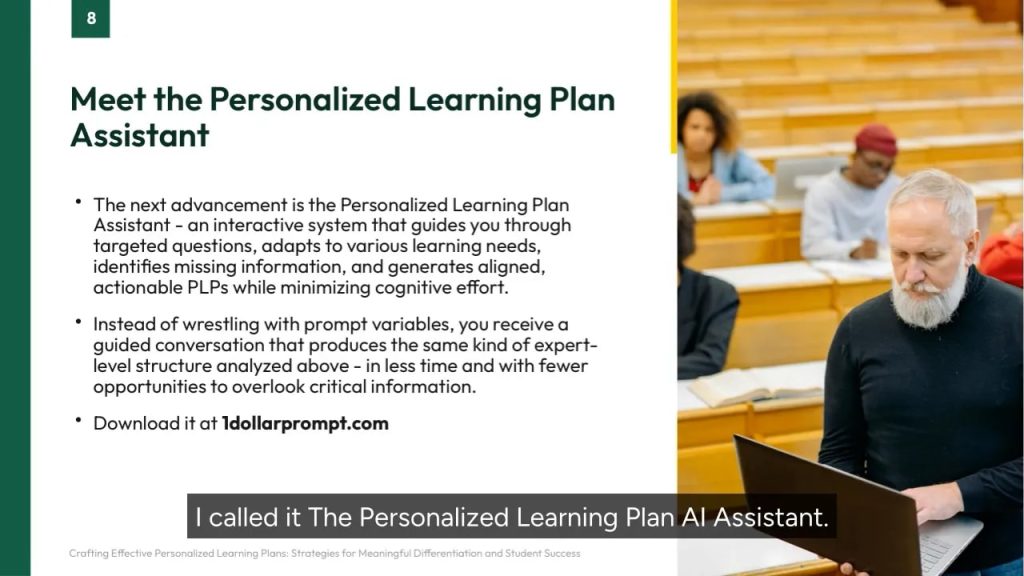
The next step is an intelligent assistant that guides the exchange. Rather than expecting educators to remember every part of a complex prompt, the system can ask targeted questions about grade, subject, standards, time available, assessment needs, and classroom constraints.
Yet powerful, the Standards Alignment Map Builder AI Assistant does not replace educator expertise. It creates a more practical workflow in which AI manages the structure while educators retain responsibility for professional decisions, local requirements, learner needs, and final review.
Final Thoughts: Make AI a Thinking Partner
The strongest educational AI workflow begins with a valid instructional purpose, not with a request for generic content. Define the role. Clarify the objective. Label the variables. Require the analytical dimensions that connect standards to instruction and evidence.
Then review the output critically. Check that activities require the same kind of thinking named in the standard. Check that assessments provide credible evidence. Check that prerequisites, context, and transfer opportunities are appropriate for the learning environment.
Educational AI should not merely generate text. At its best, it should support a more systematic way of thinking alongside educators.
Frequently Asked Questions
What are the five essential components of a standards alignment map?
A complete map identifies measurable knowledge and skills, aligned learning activities, assessment methods, prerequisite skills, and meaningful cross-curricular connections.
Why are engaging activities not automatically standards-aligned?
An activity may be memorable or creative without requiring the performance named in a standard. Alignment depends on whether learners practice and demonstrate the required knowledge, skill, investigation, model, argument, or other disciplinary action.
Which AI model provided the most classroom-ready guidance?
Gemini 3.1 Pro Preview provided the strongest combination of classroom-ready detail, examples, and balanced implementation guidance in the comparison.
Do optimized prompts remove the need for educator review?
No. A well-structured prompt improves the starting point, but educators still need to evaluate standards fidelity, local requirements, resources, learner readiness, and assessment quality.