Articles for category: Inclusive Teaching & Classroom Support

Slide titled Meet the Personalized Learning Plan Assistant

6 Foundations for Turning AI Prompts Into Actionable Personalized Learning Plans

A personalized learning plan can look complete on paper and still fail to guide meaningful support. That problem is especially familiar in differentiated and inclusive classrooms. An AI-generated plan may mention goals, strategies, progress monitoring, and family involvement, yet leave the educator to decide what those ideas mean in practice. The result is a polished document that does not reliably connect a student’s needs to Monday morning instruction. An actionable Personalized Learning Plan (PLP) does more. It links academic strengths and areas for growth to measurable goals, specific strategies, resources, evidence, assigned responsibilities, and scheduled review points. AI can help
Slide introducing the Interactive SEL Activity Designer AI Assistant beside an edtech keyboard image

How to Turn These 5 SEL Competencies Into Classroom-Ready AI Activities

Asking AI for social-emotional learning activities sounds simple: cover the key competencies, keep materials minimal, make the work engaging, and adapt it for a particular group of students. But a plausible answer is not necessarily a usable lesson. Activities may have uneven timing, repeat the same discussion format, overlook emotional regulation in favor of emotion identification, or fail to address the peer conflict and anxiety that made support necessary in the first place. The difference between a generic request and a classroom-ready result is instructional architecture. A stronger prompt gives the model a professional lens, a measurable deliverable, clear constraints,

How to Prompt AI for Differentiated Lesson Plans (UDL & Readiness Tiers)

Turn One Lesson Into 3 Readiness Tiers Without Lowering the Learning Goal

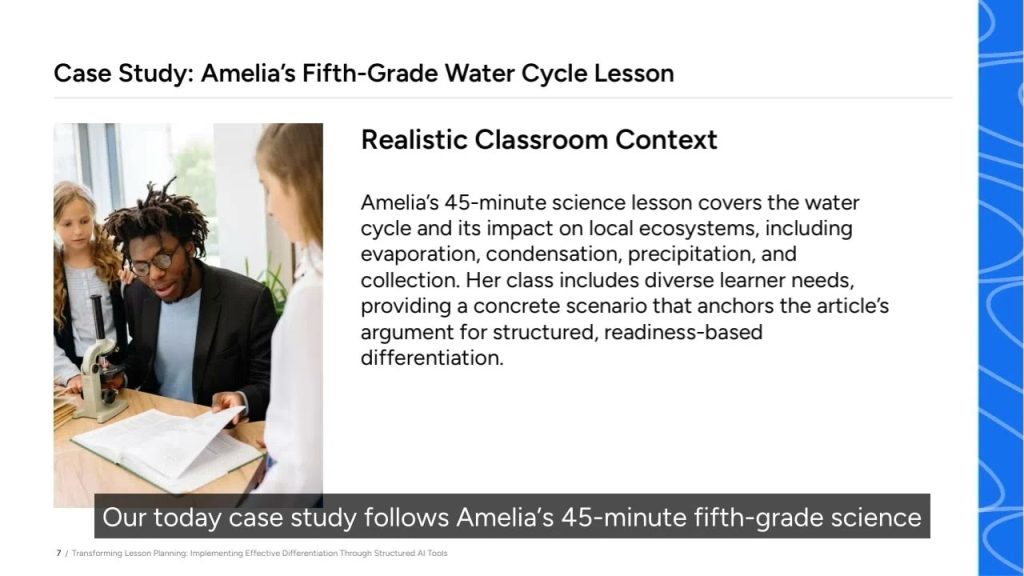
Differentiating a lesson is more demanding than creating three versions of a worksheet. It means preserving a common learning objective while adjusting the level of support, independence, complexity, and evidence of mastery for different student needs. AI can accelerate that work, but only when the request provides an instructional structure. A vague request may produce reasonable-sounding ideas while leaving important choices unresolved: What stays consistent? What changes? How should assessment align with instruction? And how can a support pathway increase access without lowering rigor? A stronger prompt turns AI from an idea generator into a more reliable planning partner. It