Articles for category: Active Learning & Student Engagement

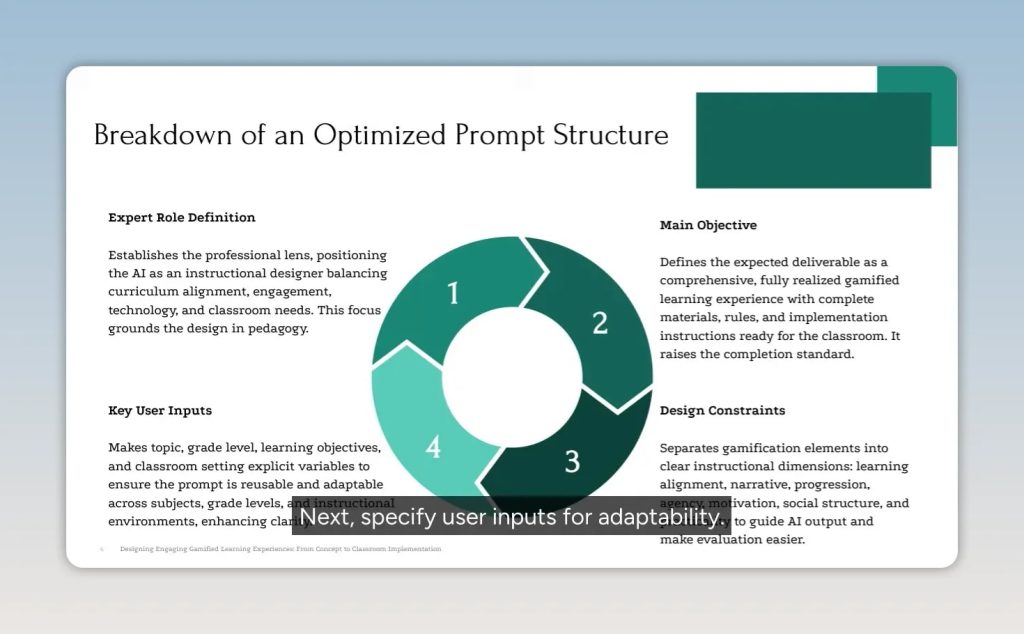
Slide titled The Raw Prompt and the Hidden Gaps with broad intentions and undefined details

6 Checks for Making AI-Generated Simulations Classroom-Ready

A teacher asks AI to design an interactive simulation about photosynthesis and receives an idea that sounds energetic – but cannot fit the class, the materials, the timetable, or the science. This is the central challenge of educational AI. A broad request may express admirable intentions: make an abstract concept concrete, involve every student, use minimal materials, and include a debrief. Yet those intentions alone leave too much for the model to interpret. The result can be a lesson with more roles than students, excessive preparation, vague facilitation, or an oversimplified scientific model. Better prompt design does not mean adding

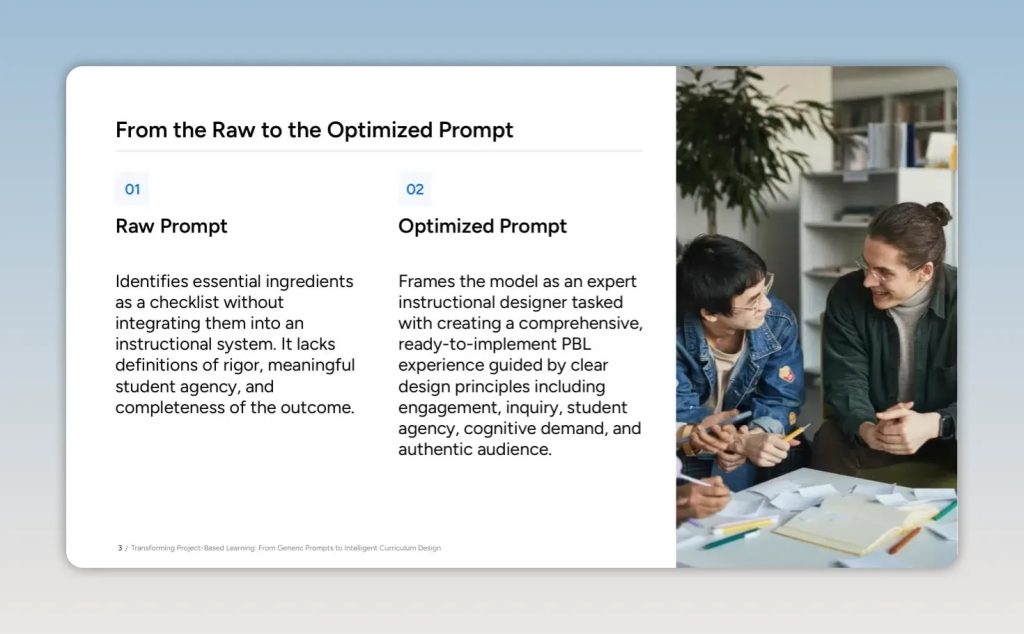
Slide showing a circular four-part breakdown of an optimized prompt structure

7 Design Constraints That Turn Gamification Prompts Into Classroom-Ready Learning Systems

Gamification often sounds easier than it is. The initial idea is appealing: give a unit an immersive theme, let students make choices, reward progress, and build collaboration into the experience. But practical questions arrive quickly. How will the game reinforce the actual learning objectives? Will the challenges build skills instead of simply adding entertainment? Can the system work for English language learners, students with IEPs, and a classroom with limited technology? And where are the handouts, source packets, rubrics, rules, and teacher procedures? A short AI request may generate an engaging concept, but it leaves too many instructional decisions open.

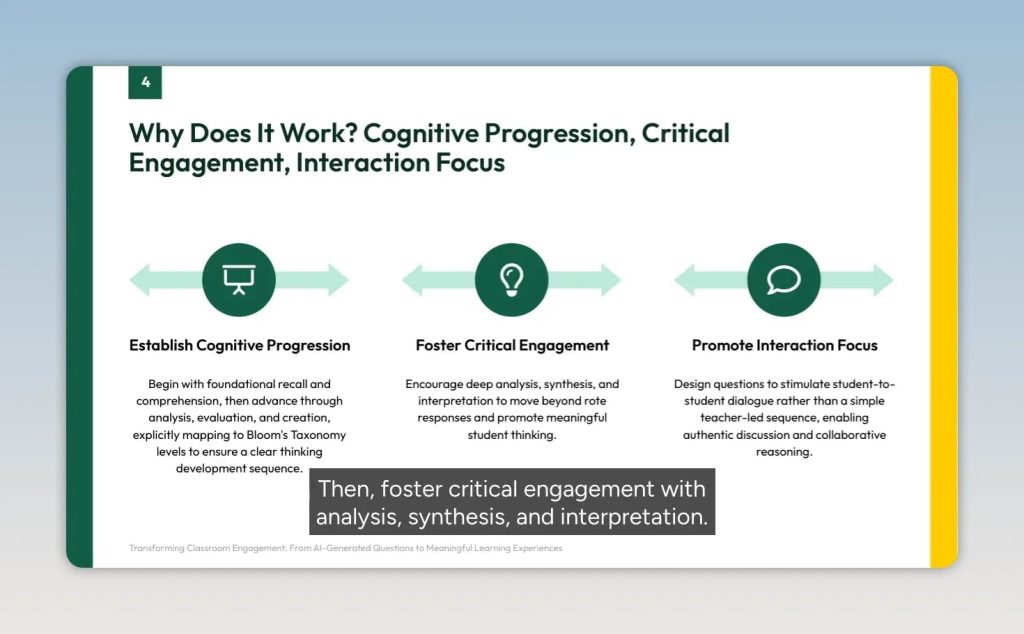
Slide comparing a raw prompt with an optimized prompt

Make AI-Generated PBL Plans More Rigorous With These 5 Core Design Principles

Project-based learning (PBL) can turn a classroom topic into meaningful work: students investigate a real problem, make decisions, collaborate, and create something for an audience beyond the teacher. But designing that kind of experience takes careful planning. Standards, time, available technology, student needs, assessment, and authentic outcomes all need to work together. AI can support that planning, but the quality of the result depends heavily on the request. A generic prompt may list the ingredients of a project without explaining the level of rigor, the instructional priorities, or what a usable final plan should contain. A stronger prompt makes those

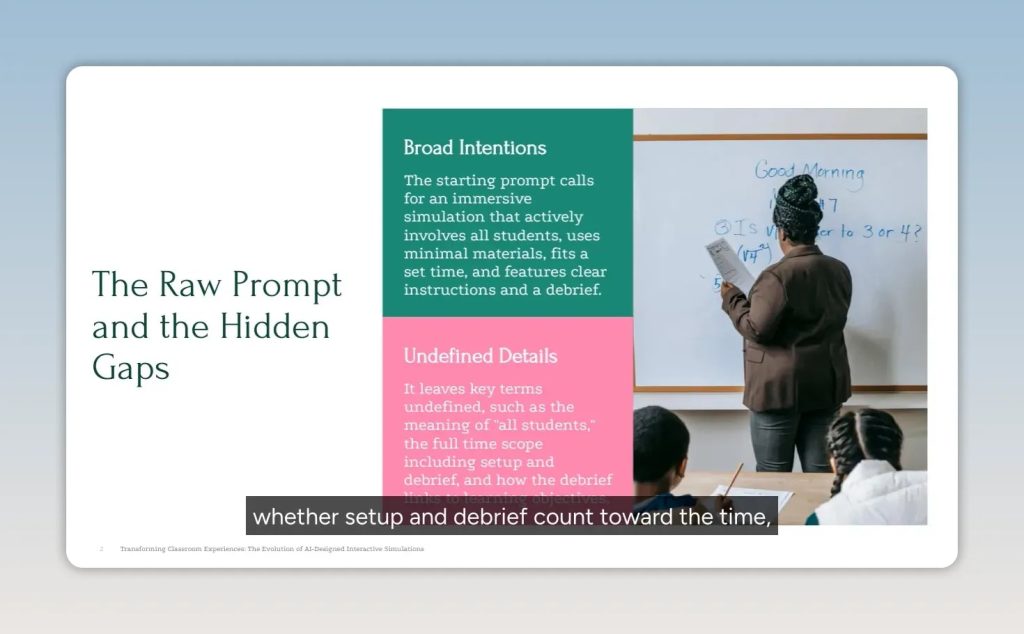
Slide showing cognitive progression critical engagement and interaction focus

The 5-Part Framework That Turns AI Questions Into Classroom-Ready Discussions

Planning a thoughtful discussion takes more than asking an AI tool for “10 questions about this topic.” A basic request can produce material that is usable, but usable is not always rigorous, sequenced, relevant, or ready for a real classroom. The difference lies in prompt design. When instructional goals remain implied, an AI model has to guess how to build complexity, surface misconceptions, encourage peer dialogue, and connect learning to the world beyond the classroom. A stronger prompt makes those decisions explicit. This guide shows how to transform a broad discussion-question request into a reusable curriculum framework. It also examines