Articles for tag: AI prompting, Lesson Planning

How to Prompt AI for Differentiated Lesson Plans (UDL & Readiness Tiers)

Turn One Lesson Into 3 Readiness Tiers Without Lowering the Learning Goal

Differentiating a lesson is more demanding than creating three versions of a worksheet. It means preserving a common learning objective while adjusting the level of support, independence, complexity, and evidence of mastery for different student needs. AI can accelerate that work, but only when the request provides an instructional structure. A vague request may produce reasonable-sounding ideas while leaving important choices unresolved: What stays consistent? What changes? How should assessment align with instruction? And how can a support pathway increase access without lowering rigor? A stronger prompt turns AI from an idea generator into a more reliable planning partner. It
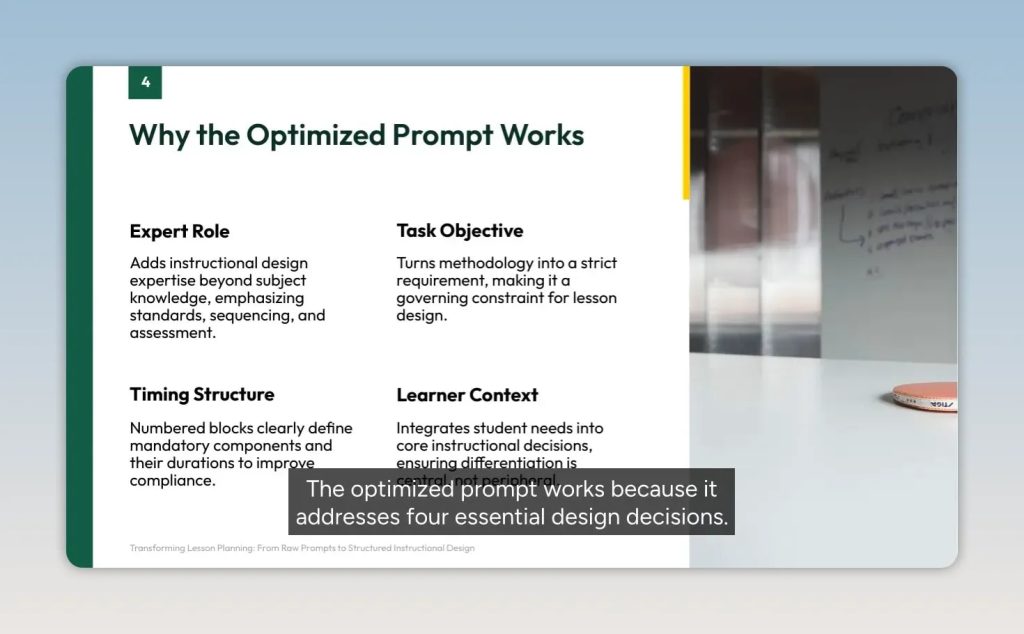
Slide titled Why the Optimized Prompt Works showing Expert Role, Task Objective, Timing Structure, and Learner Context

4 Prompt Design Decisions That Turn AI Drafts Into Teachable Lessons

A detailed lesson-planning prompt can still produce a weak lesson. You can specify a subject, grade level, standards, methodology, timing, materials, misconceptions, and learner needs—then receive a response that appears complete but is not ready to teach. It may include every requested heading while missing scientific accuracy, meaningful differentiation, or a realistic sequence of activities. Completeness is not the same as instructional quality. The practical goal is to turn a broad request into a standards-aligned, teachable lesson with a clear internal logic: objectives shape activities, activities create evidence of learning, timing reflects classroom reality, and learner needs influence the design