Articles for tag: ai prompting for educators, assessment design

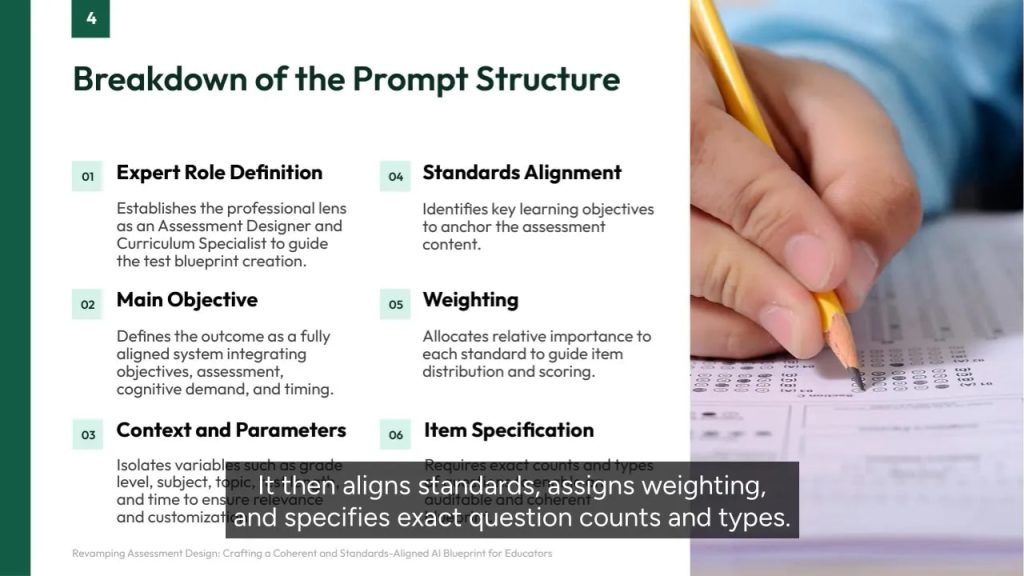
Slide showing a breakdown of prompt structure with six assessment components

How to Build Auditable AI Test Blueprints Across 6 Essential Components

A summative assessment can look polished and still be fundamentally misaligned. A test may cover the right topic, contain a reasonable mix of formats, and fit into a familiar class period. Yet a closer review can reveal a mismatch between standards and items, weighting that does not reflect instructional priorities, cognitive demand that stays too low, or totals that simply do not add up. AI can speed up assessment planning, but it cannot replace assessment judgment. The useful goal is not merely to generate a test blueprint. It is to produce an artifact that is coherent, standards-aligned, instructionally useful, mathematically
How to Write Reliable Rubrics with Generative AI

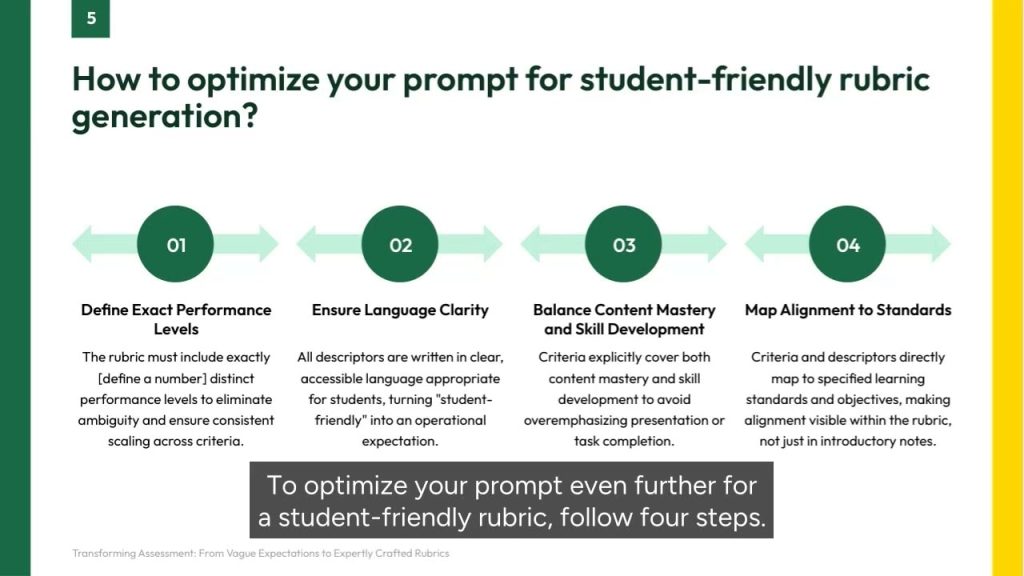
4 Requirements That Turn AI-Generated Rubrics Into Reliable Assessment Systems

A rubric can determine whether an assignment feels transparent or arbitrary. When expectations are concrete, students can plan, self-assess, revise, and understand how their work will be evaluated. When expectations are vague, students may focus on the wrong details while instructors spend more time clarifying requirements and defending grades. Generative AI can draft a rubric quickly, but polished language does not automatically create a reliable assessment instrument. A generic request may overlook standards alignment, formative assessment, accessibility, collaboration, or required deliverables. The answer is not simply asking for a longer rubric. It is providing a stronger instructional design framework. Key