Articles for category: Assessment, Feedback & Learning Evidence

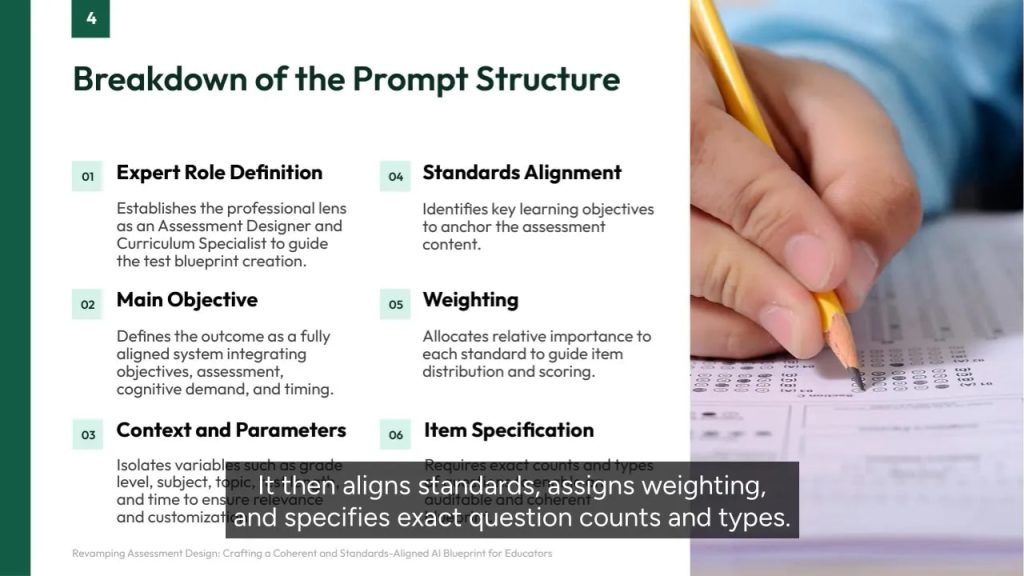
Slide showing a breakdown of prompt structure with six assessment components

How to Build Auditable AI Test Blueprints Across 6 Essential Components

A summative assessment can look polished and still be fundamentally misaligned. A test may cover the right topic, contain a reasonable mix of formats, and fit into a familiar class period. Yet a closer review can reveal a mismatch between standards and items, weighting that does not reflect instructional priorities, cognitive demand that stays too low, or totals that simply do not add up. AI can speed up assessment planning, but it cannot replace assessment judgment. The useful goal is not merely to generate a test blueprint. It is to produce an artifact that is coherent, standards-aligned, instructionally useful, mathematically

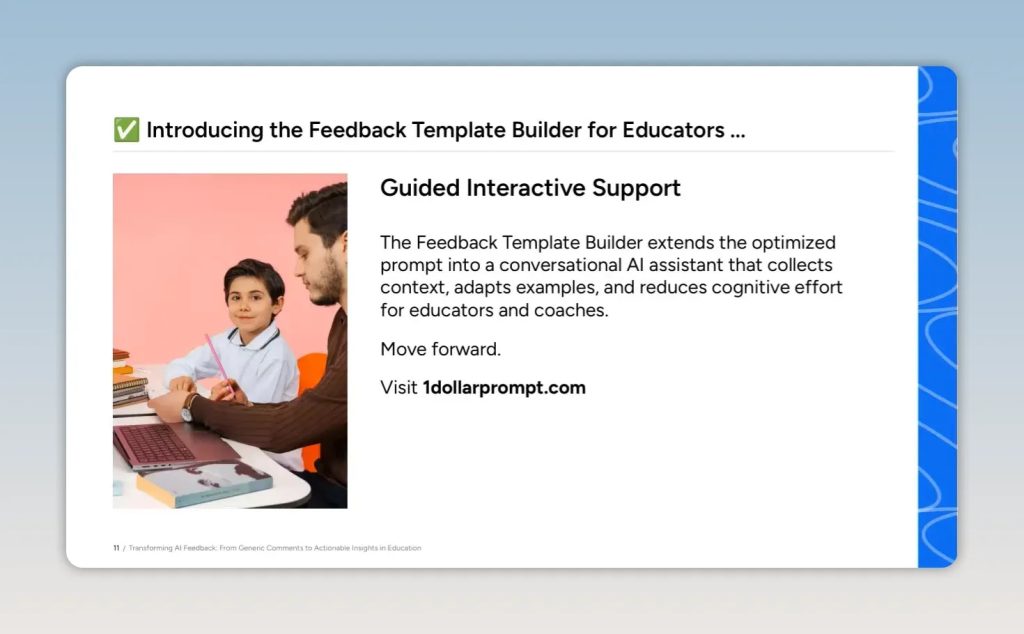
Slide introducing Feedback Template Builder for Educators with guided interactive support

Turn Generic Feedback Into Action With this 5-Part Coaching Framework

“Go deeper.” “Connect this to theory.” “Make your goal more specific.” “Consider the student perspective.” These are familiar feedback comments – and often accurate ones. But accuracy alone does not show a learner what to change, how to change it, or how to approach the next attempt with confidence. AI can help educators create reusable feedback faster, but a general request often creates general results. The real opportunity is not simply generating more comments. It is designing a feedback system that moves clearly from diagnosis to action. A stronger prompt gives an AI model a professional role, an educational objective,

How to Write Reliable Rubrics with Generative AI

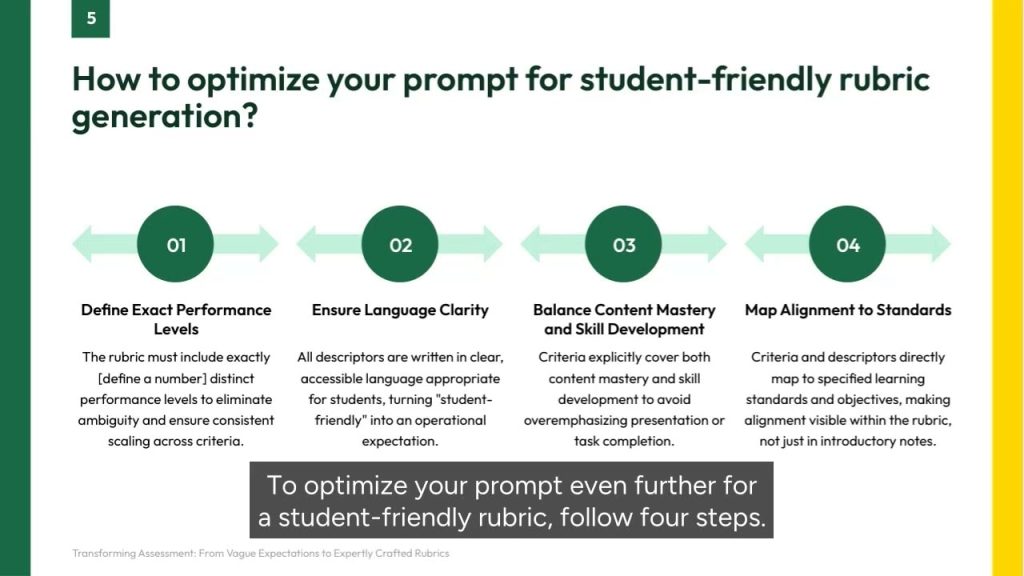
4 Requirements That Turn AI-Generated Rubrics Into Reliable Assessment Systems

A rubric can determine whether an assignment feels transparent or arbitrary. When expectations are concrete, students can plan, self-assess, revise, and understand how their work will be evaluated. When expectations are vague, students may focus on the wrong details while instructors spend more time clarifying requirements and defending grades. Generative AI can draft a rubric quickly, but polished language does not automatically create a reliable assessment instrument. A generic request may overlook standards alignment, formative assessment, accessibility, collaboration, or required deliverables. The answer is not simply asking for a longer rubric. It is providing a stronger instructional design framework. Key

Slide showing role definition scope specification and required components

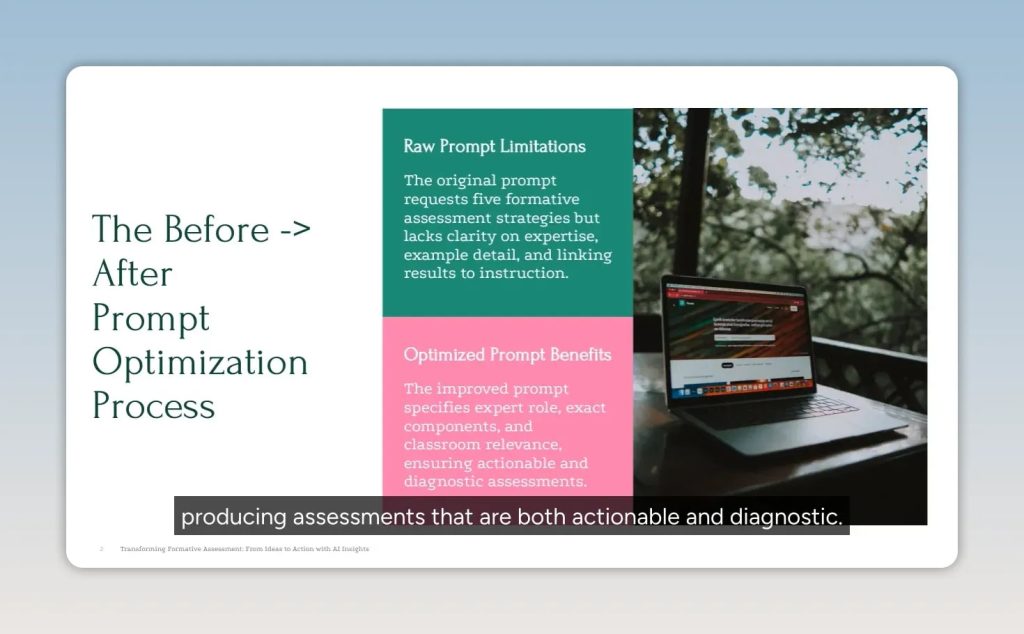
5 Prompt Elements That Turn Formative Assessment Ideas Into Classroom Decisions

Formative assessment matters because it helps teachers understand what students can do now and what teaching move should come next. The challenge is moving beyond a request such as “Give me some assessment ideas” toward strategies that reveal understanding, support different learners, fit the time available, and produce evidence worth acting on. Generative AI can help, but a broad request often produces broad answers: familiar activity names without ready-to-use materials, accessibility supports, or a clear explanation of how results should change instruction. The solution is not simply to ask for more ideas. It is to turn the request into a