Articles for tag: AI prompting, instructional design

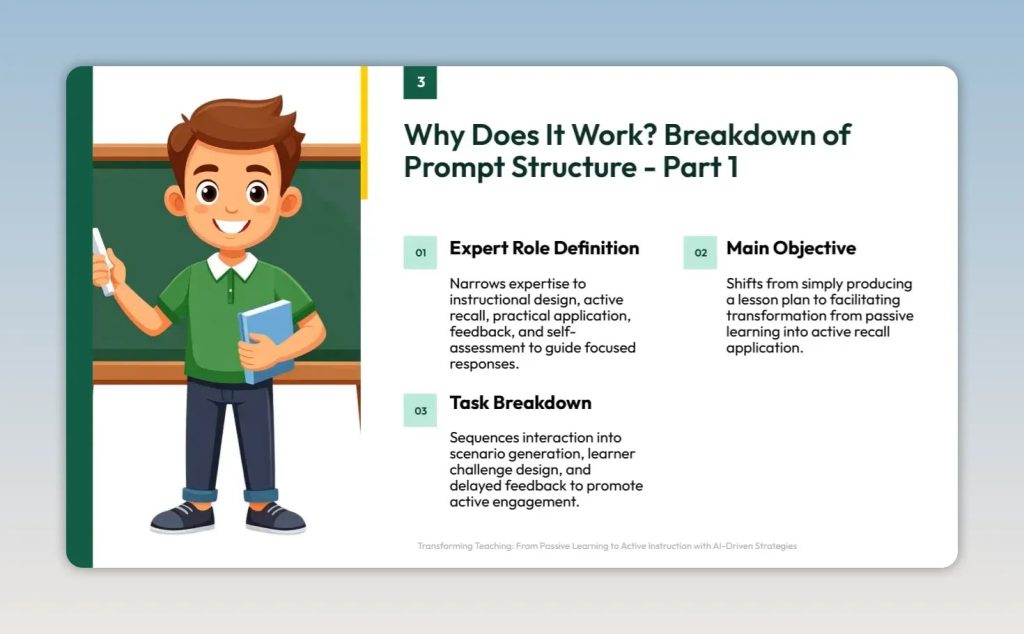
Slide titled Why Does It Work with expert role definition main objective and task breakdown

How to Build 15-Minute Mini-Lesson Challenges With This 4-Stage AI Workflow

You can understand an instructional strategy on paper and still struggle to use it when a real teaching problem appears. The gap is familiar to teachers, corporate trainers, and learning-and-development leaders: theory makes sense, but a low-energy group, mixed experience levels, and an unclear misconception require quick professional judgment. AI can help close that gap—but not when it simply produces a lesson plan on demand. A stronger approach turns AI into a practice environment: it gives you a realistic scenario, asks you to design a response, and withholds the expert model until you have committed to your own plan. This
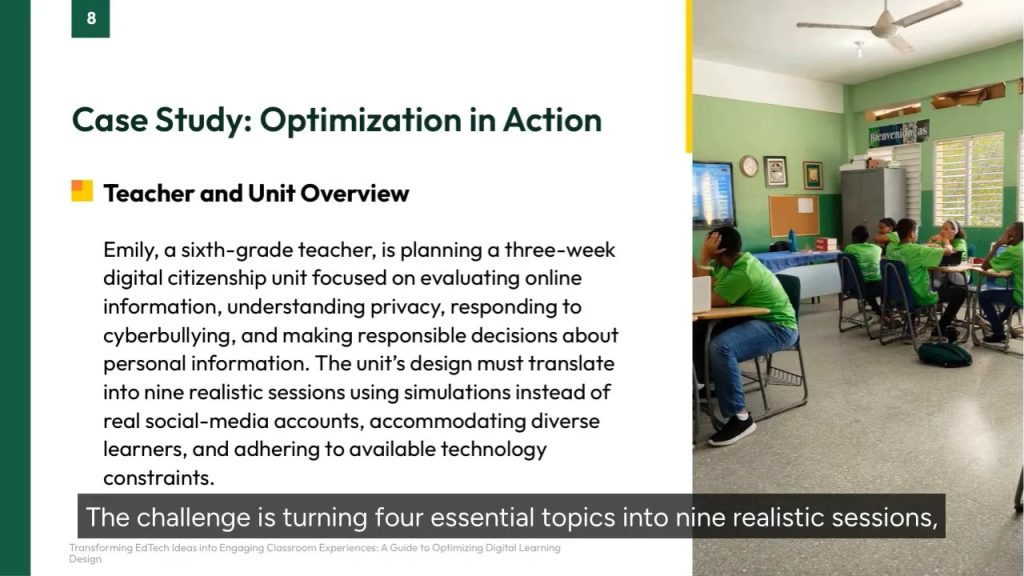
Slide titled Case Study Optimization in Action with classroom photo

6 Prompt Requirements That Turn Vague EdTech Ideas Into Classroom-Ready Learning Plans

Technology-supported learning can sound simple in principle: choose a topic, select a tool, and ask students to create something meaningful. In practice, effective planning has to balance objectives, pacing, accessibility, feedback, student agency, available technology, and uneven access beyond school hours. AI can help organize that complexity—but only when the planning request gives it a useful structure. A loosely written prompt may produce creative activities, yet still leave key decisions unresolved: Which objective comes first? What can realistically fit into the schedule? Which tools are actually approved? How will students with different reading levels and technology skills participate? The solution

How to Prompt AI for Differentiated Lesson Plans (UDL & Readiness Tiers)

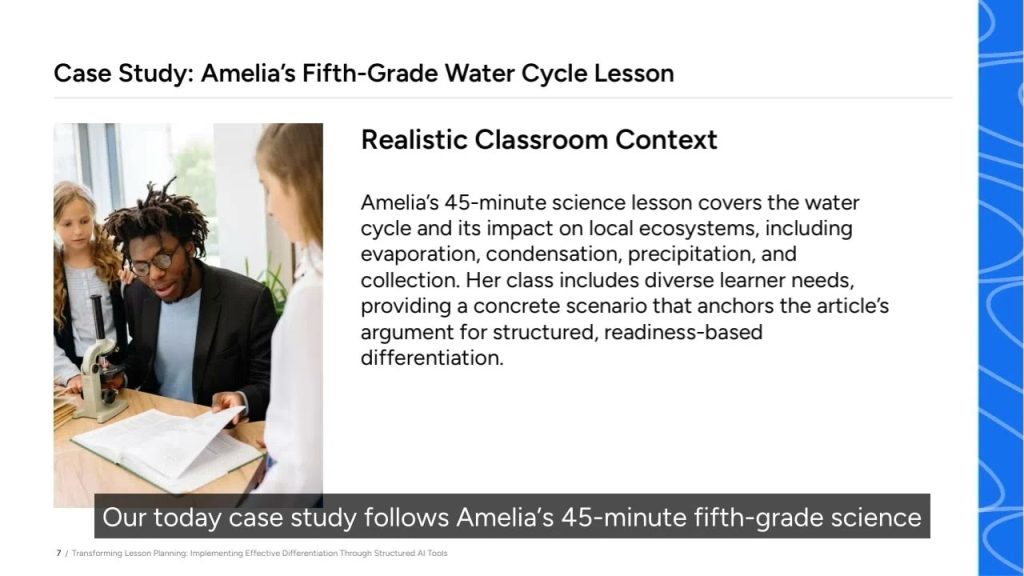
Turn One Lesson Into 3 Readiness Tiers Without Lowering the Learning Goal

Differentiating a lesson is more demanding than creating three versions of a worksheet. It means preserving a common learning objective while adjusting the level of support, independence, complexity, and evidence of mastery for different student needs. AI can accelerate that work, but only when the request provides an instructional structure. A vague request may produce reasonable-sounding ideas while leaving important choices unresolved: What stays consistent? What changes? How should assessment align with instruction? And how can a support pathway increase access without lowering rigor? A stronger prompt turns AI from an idea generator into a more reliable planning partner. It

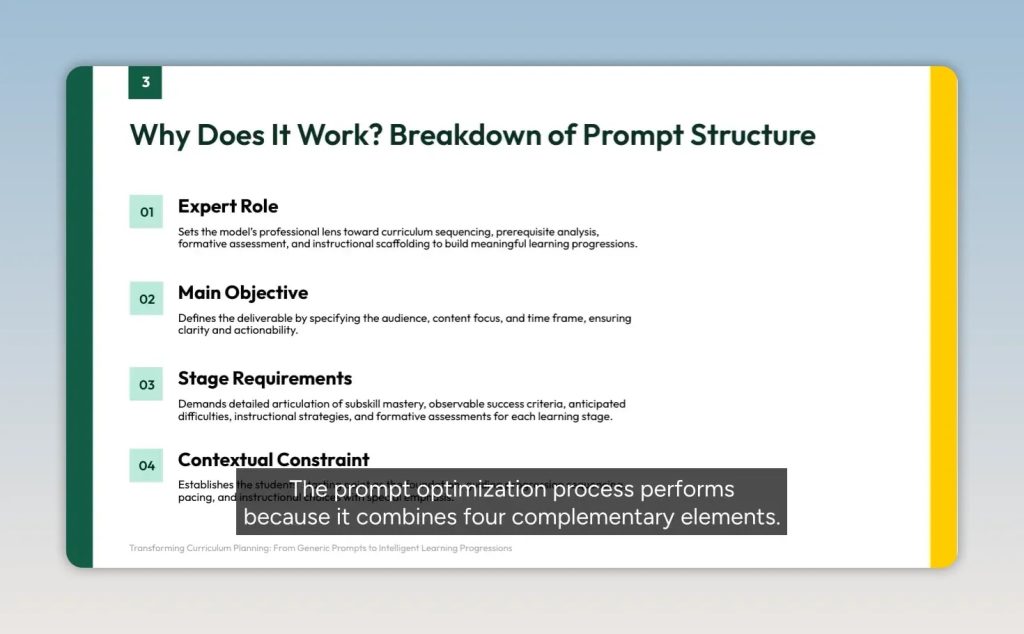
Slide listing expert role, main objective, stage requirements, and contextual constraints

How 4 Prompt Elements Turn AI Outlines Into Usable Learning Progressions

A learning progression is one of the most valuable tools an educator can build—and one of the easiest to make only superficially. An AI-generated plan may arrive with polished headings, activities, and assessments. Yet it can still be difficult to use in practice: stages may not fit the calendar, success criteria may be impossible to observe, assessments may not match instruction, or the sequence may overlook what students already know. The issue is often not the educational goal. It is the gap between what an educator intends and what the prompt actually communicates. A generic request can produce a useful