October 15, 2026

How to Choose AI Teaching Tools That Align with MOE Standards and FSBB Needs
Discover the top ai learning tools for Singapore teachers. Save time on lesson planning and FSBB differentiation with specialized ai tools for learning.
October 15, 2026
Discover the top ai learning tools for Singapore teachers. Save time on lesson planning and FSBB differentiation with specialized ai tools for learning.
October 6, 2026

Learn how to choose and create math resources for teachers that align with standards, support differentiation, and reduce planning time.
September 30, 2026

Create stronger teacher prompts with clear context, constraints, and review steps to produce useful lesson plans, assessments, and parent messages.
September 26, 2026

Explore the benefits of AI in education, from faster lesson planning and feedback to inclusive learning, guided tools, and safer classroom use.
September 16, 2026

Explore practical teacher burnout solutions, workload changes, boundaries, and guided AI tools that help educators reclaim time and energy.
September 13, 2026

Learn how ChatGPT for educators supports lesson planning, feedback, differentiation, privacy, and district workflows with practical safeguards.
August 31, 2026
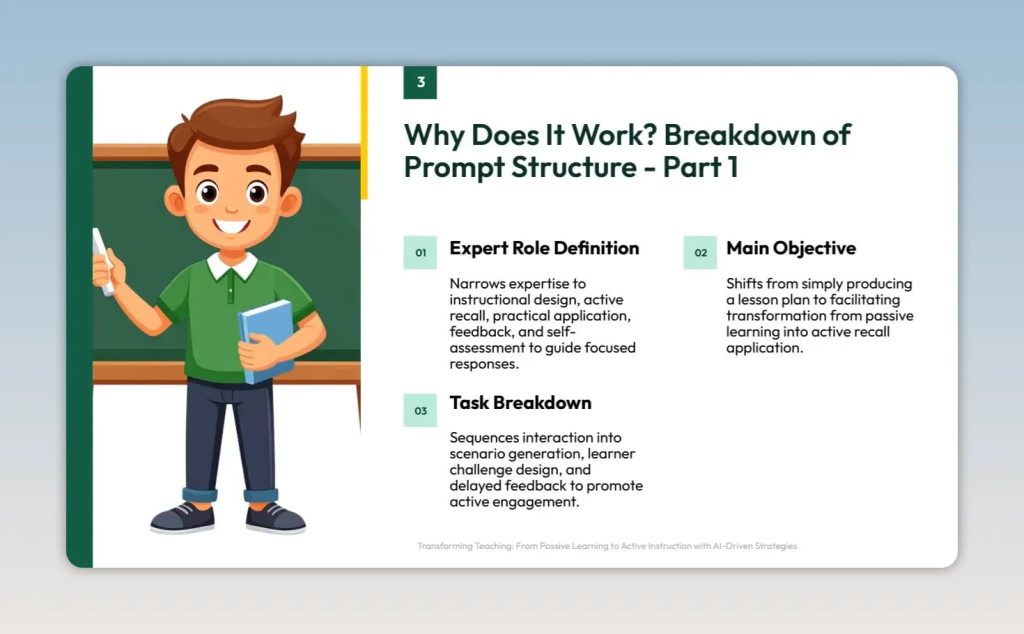
You can understand an instructional strategy on paper and still struggle to use it when a real teaching problem appears. The gap is familiar to teachers, corporate trainers, and learning-and-development leaders: theory makes sense, but a low-energy group, mixed experience levels, and an unclear misconception require quick professional judgment. AI can help close that gap—but not when it simply produces a lesson plan on demand. A stronger approach turns AI into a practice environment: it gives you a realistic scenario, asks you to design a response, and withholds the expert model until you have committed to your own plan. This
August 31, 2026
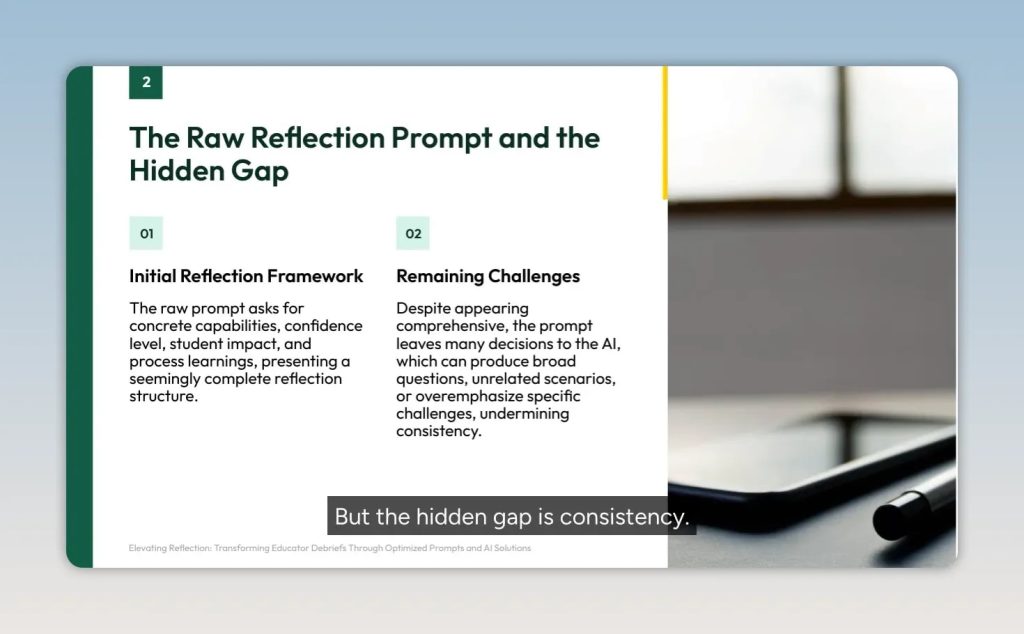
A professional learning cycle can create real classroom change—and still end with a reflection that barely captures what changed, why it mattered, and what should happen next. The familiar questions, What went well? and What would you do differently?, are not wrong. They are simply too broad on their own. They often produce sincere but general answers, leaving educators without a clear account of new capabilities, confidence, student outcomes, or next-cycle actions. That is not necessarily a reflection problem. It is often a prompt-design problem. A well-designed AI reflection prompt can turn a loose retrospective into a structured coaching debrief.
October 15, 2026
Ariel Elyah

October 13, 2026
Ariel Elyah

October 10, 2026
Ariel Elyah