A teacher asks AI to design an interactive simulation about photosynthesis and receives an idea that sounds energetic – but cannot fit the class, the materials, the timetable, or the science.
This is the central challenge of educational AI. A broad request may express admirable intentions: make an abstract concept concrete, involve every student, use minimal materials, and include a debrief. Yet those intentions alone leave too much for the model to interpret. The result can be a lesson with more roles than students, excessive preparation, vague facilitation, or an oversimplified scientific model.
Better prompt design does not mean adding words for their own sake. It means turning a creative request into a practical instructional specification: define the expertise needed, state the outcome, set the non-negotiable constraints, and require evidence that learning has been consolidated.
Key Takeaways
- Optimized educational prompts define an expert role, a practical outcome, and explicit classroom constraints.
- For simulations, setup, participation, materials, timing, and debriefing must all be specified—not assumed.
- Claude offered the strongest balance in the carbon-cycle case, while Gemini and Minimax exposed feasibility and scientific-fidelity gaps.
- Teachers should audit every AI-generated lesson for role counts, time, resources, accuracy, and individual evidence of learning.
Table of Contents
- The Hidden Gaps in a Raw Prompt
- Raw Prompt: The Starting Point
- Optimized Prompt: A Classroom Design Specification
- Why Prompt Optimization Works
- Case Study: A Fifth-Grade Carbon-Oxygen Cycle Simulation
- What Three AI Outputs Reveal
- A Practical Audit for AI-Generated Lessons
- From Better Prompts to Guided Instructional Assistants
- Conclusion
The Hidden Gaps in a Raw Prompt
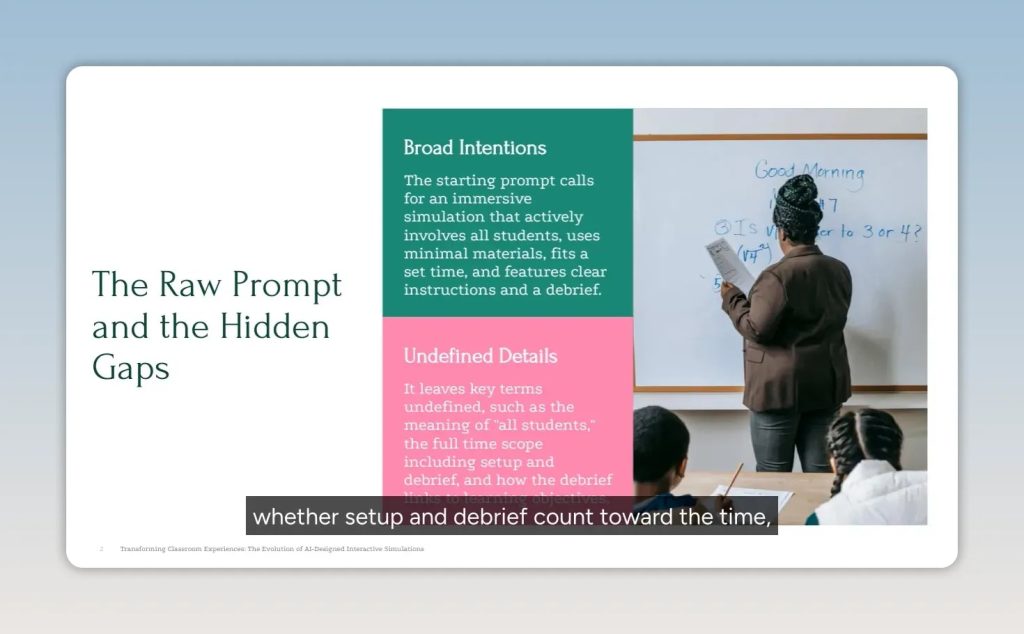
Consider a common starting request: create an interactive role-play or simulation to help students understand a topic. It may ask for active participation, a defined time frame, simple materials, clear directions, and a debrief.
Those are useful goals, but several classroom-critical questions remain unanswered:
- Does “every student” mean every learner has a meaningful role at the same time?
- Does the time limit include setup, transitions, and reflection?
- Must the materials already exist in the classroom?
- How should the debrief connect the activity back to the exact learning objective?
- How will the plan account for class size, room layout, and student age?
Without those details, an AI system has room to be inventive—but not necessarily useful. The lesson may be engaging in theory while creating additional planning work for the teacher.
Raw Prompt: The Starting Point
The reusable raw prompt below captures the original educational intent. It is a valuable beginning, but it requires stronger operational constraints before it can reliably produce a classroom-ready lesson.
Design an interactive simulation or role-play activity to help my [GRADE LEVEL] students understand [CONCEPT/TOPIC]. The simulation should:
- Create an immersive experience that makes abstract concepts concrete
- Actively involve all students
- Take approximately [TIME] to implement
- Require minimal special materials
- Include clear instructions and setup guidelines
- Feature a debriefing component to solidify learning

My classroom constraints and available resources are:
[DESCRIBE CONSTRAINTS/RESOURCES]
Optimized Prompt: A Classroom Design Specification
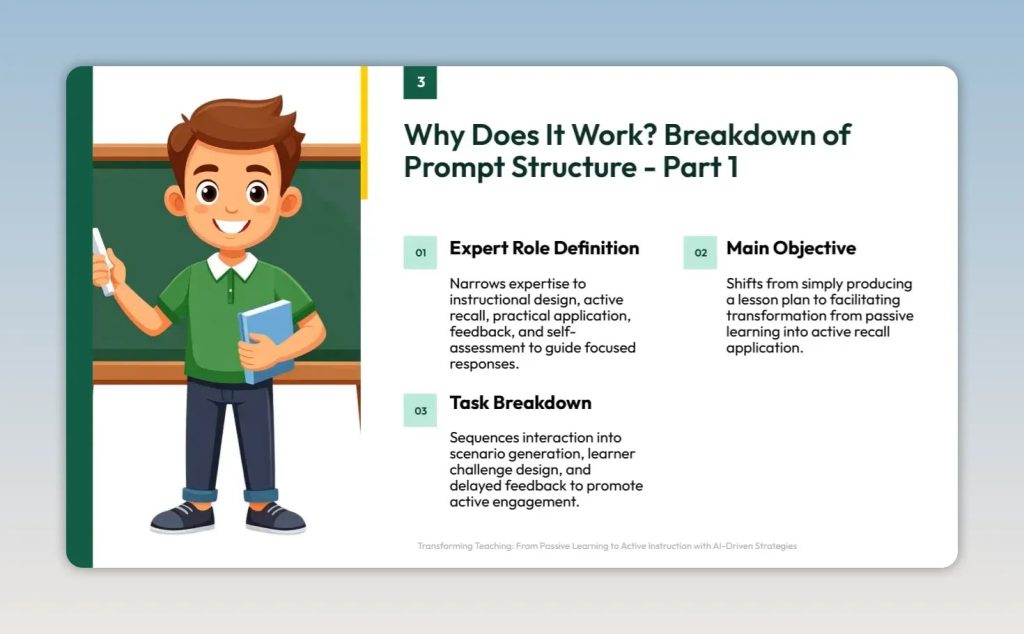
The improved version gives the model three forms of guidance: an expert role, a clear objective, and an organized set of classroom constraints. Rather than simply asking for a creative game, it asks for a complete instructional design that must work under stated conditions.
You are an expert Instructional Designer specializing in engaging, standards-aligned, and resource-efficient K–12 simulations and role-playing activities.

Design a complete, ready-to-implement interactive simulation or role-play activity based on the user's specifications. Prioritize active participation and conceptual clarity.

The activity must meet these requirements:
- Conceptual Clarity: Turn [CONCEPT/TOPIC] into a concrete, tangible experience.
- Engagement: Give every student a meaningful active role.
- Time Constraint: Keep total implementation time, including setup and debriefing, within [TIME].
- Resource Efficiency: Use minimal or no specialized materials, relying on common classroom items or student imagination.
- Usability: Provide step-by-step setup, execution, and facilitation instructions.
- Learning Consolidation: Include a structured debrief tied directly to the learning objectives of [CONCEPT/TOPIC].

Classroom context:
- Target audience: [GRADE LEVEL]
- Classroom environment and resources: [DESCRIBE CONSTRAINTS/RESOURCES]
This structure does not merely prescribe a format. It defines success. The model now knows that the lesson must be feasible, participatory, resource-aware, teachable, and connected to a learning goal.
Why Prompt Optimization Works
The key improvement is organization. A strong educational prompt separates purpose, constraints, context, and required deliverables so that the AI can make better trade-offs.
1. Define an expert role
Asking the model to act as an instructional designer signals that the output should balance engagement with learning design, developmental appropriateness, classroom management, and resource efficiency. A generic creative response may prioritize novelty. An instructional-design response should prioritize usable learning.
2. Require a ready-to-implement outcome
The phrase “complete, ready-to-implement” matters. It discourages a loose activity concept and calls for the information a teacher needs: materials, room setup, student roles, teacher cues, timing, procedures, and closure.
3. Make constraints measurable
“Approximately 45 minutes” is not as reliable as “must not exceed 45 minutes including setup and debrief.” Likewise, “minimal materials” becomes far more useful when the prompt specifies that the design should use existing classroom resources.
4. Build in learning consolidation
A simulation creates an experience; a debrief turns that experience into understanding. The prompt should explicitly require questions and reflection that connect student actions to the underlying concept. This distinction is essential for experiential learning.
Case Study: A Fifth-Grade Carbon-Oxygen Cycle Simulation
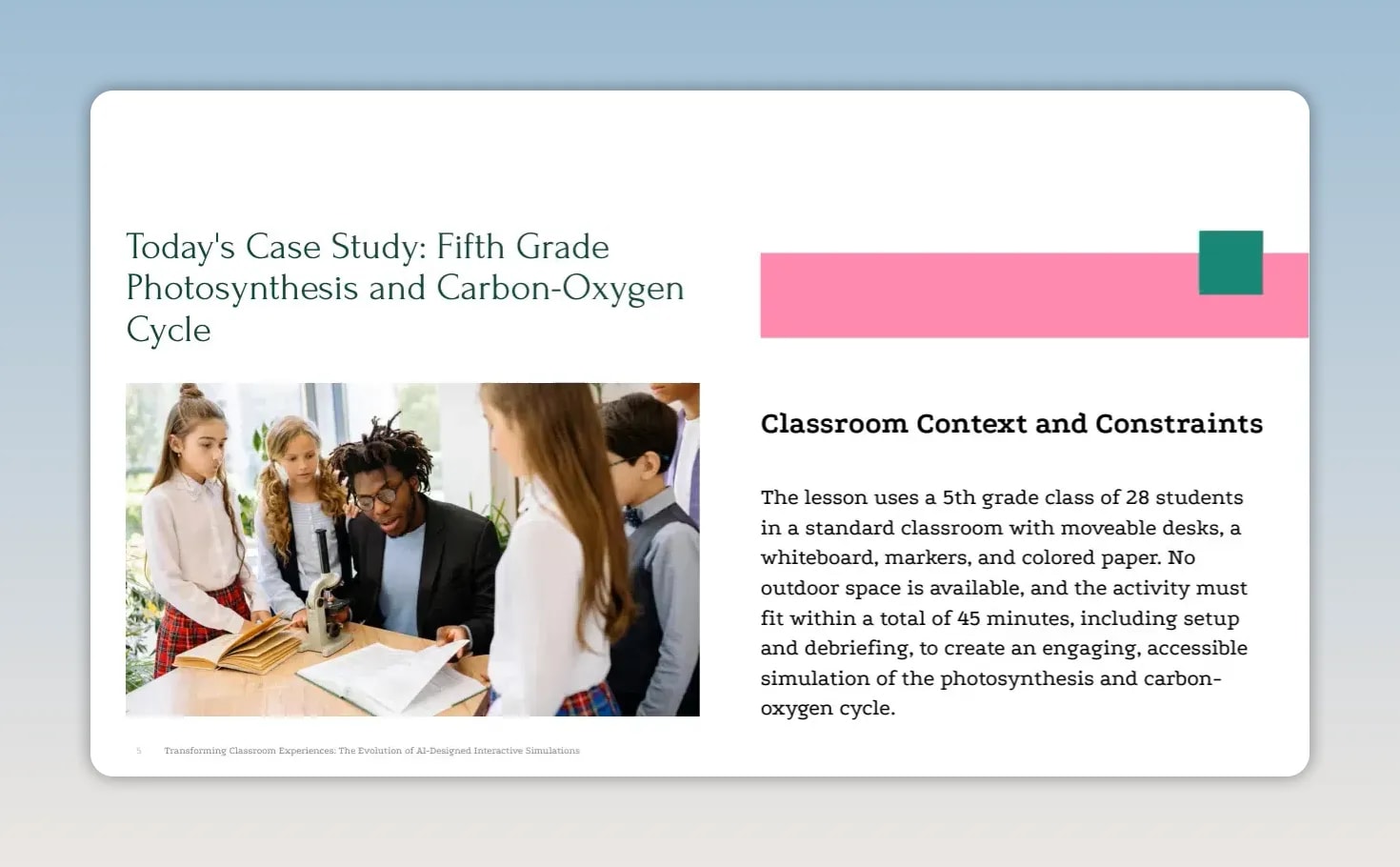
The detailed example centers on a fifth-grade teacher with 28 students. The class has a standard indoor classroom with movable desks, a whiteboard, markers, and colored paper. There is no outdoor space, and the entire photosynthesis and carbon-oxygen cycle simulation—including setup and debrief—must fit into 45 minutes.
The teaching challenge is familiar: students may remember that plants use carbon dioxide and release oxygen, but still struggle to visualize how carbon moves through plants, glucose, animals, and the atmosphere.
A well-designed simulation would make that movement visible. Students might represent sunlight, water, carbon dioxide, oxygen, glucose, plants, and animals, while the room becomes a set of simple learning zones. But the activity remains educational only if its debrief traces the journey of carbon and explains the relationship between photosynthesis and respiration.
The core lesson should remain scientifically accurate at the appropriate level: plants use carbon dioxide, water, and energy from sunlight to make glucose and release oxygen. During respiration, organisms use glucose and oxygen and produce carbon dioxide, water, and energy. Because classroom role-play is a simplified model, the teacher should clearly distinguish the simulation from the full molecular process.
What Three AI Outputs Reveal
The optimized request was tested with Claude Sonnet, Gemini, and Minimax M3. Each produced a recognizably useful approach, but each also revealed why teacher review remains necessary.
Claude Sonnet: The best overall balance
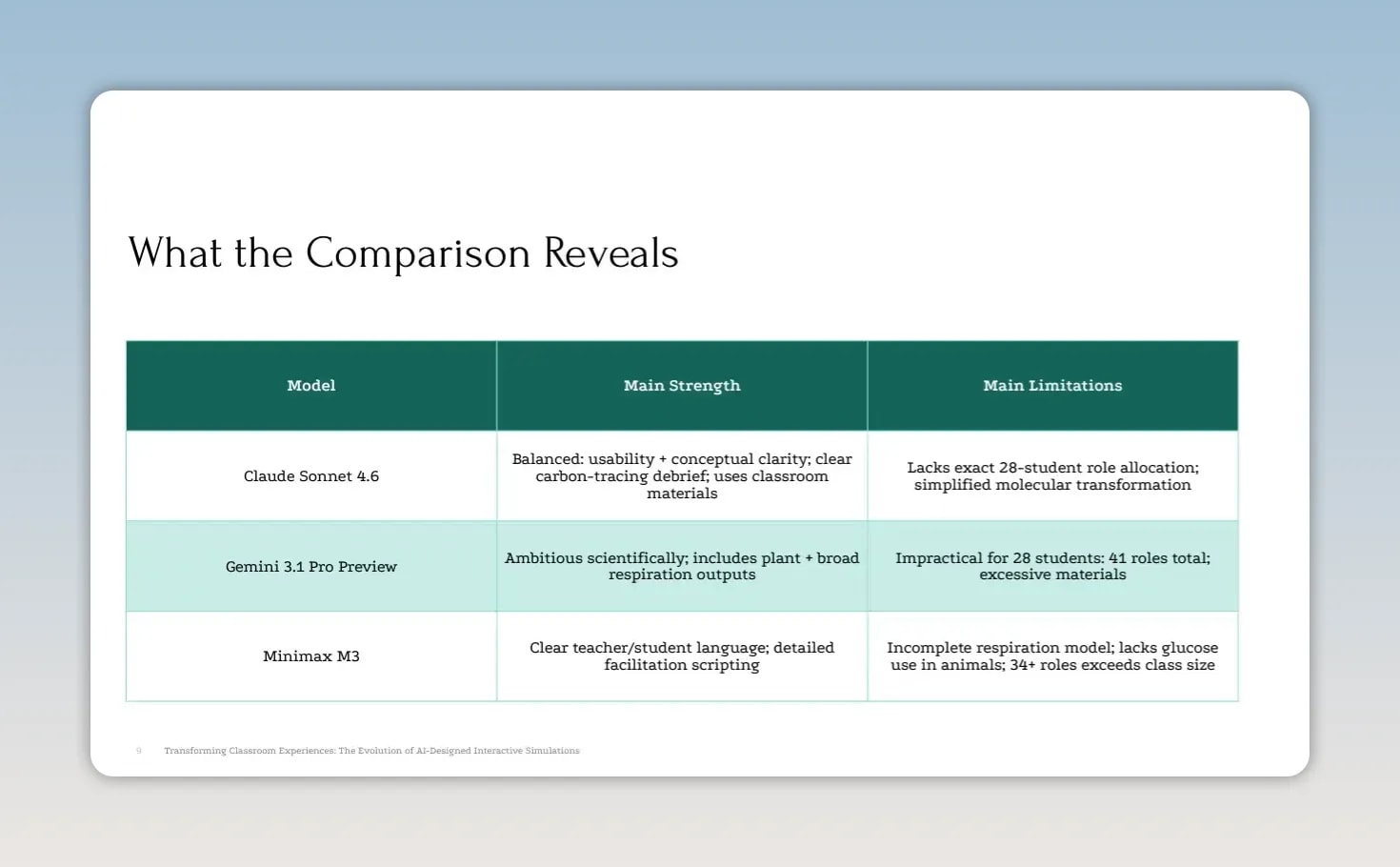
Claude proposed “The Great Carbon Cycle Exchange,” a relatively practical simulation with clear time and room organization, familiar materials, and roles such as sunlight, water, and carbon molecules. Its strongest feature was the debrief: students trace one carbon atom from the atmosphere into a plant, into glucose, into an animal, and back to the atmosphere.
That carbon-tracing sequence directly reinforces the core concept rather than ending with a generic discussion. It also supports a manageable lesson structure, though the teacher should still verify that the final role distribution totals exactly 28 students.
Gemini: Scientifically ambitious but resource-heavy
Gemini offered richer scientific coverage, including plant respiration and more detailed input-output relationships involving carbon dioxide, water, and energy. This conceptual breadth is valuable.
However, its plan required 41 student roles and extensive preparation, making it impractical for a class of 28. It demonstrates an important point: more detail is not automatically better. If an activity cannot be run with the learners and materials available, it is not ready to implement.
Minimax M3: Strong facilitation language, weaker scientific fidelity
Minimax M3 provided especially clear student-facing language and repeated verbal rehearsal prompts. Asking students to state what they represent and where they are moving can improve clarity, pacing, and participation.
Its main limitation was scientific accuracy. The animal-respiration sequence omitted glucose use and water production, weakening the explanation of how energy and carbon move through the system. Its proposed role allocation also exceeded the available class size.
A Practical Audit for AI-Generated Lessons 👉 6 checks
Before using any AI-generated simulation, conduct a short implementation audit. A polished response can still fail on simple but decisive constraints.
- Count the roles. Confirm that every assignment totals the actual class enrollment.
- Count the minutes. Include setup, explanation, movement, transitions, debriefing, and cleanup.
- Check the materials. Ensure the list aligns with what is actually available and the preparation time you have.
- Verify the science. Look for missing relationships, misleading simplifications, or vocabulary that requires clarification.
- Inspect participation. Make sure every student has a meaningful task rather than waiting for others to perform.
- Strengthen assessment. Add a quick individual exit check, such as completing the inputs and outputs of photosynthesis and respiration.
For the carbon-cycle activity, a one-minute prompt can reveal far more than group movement alone: ask each student to explain where a carbon atom can travel after leaving the atmosphere. This checks whether the concrete simulation became a conceptual model.
From Better Prompts to Guided Instructional Assistants
Even an excellent prompt has a limitation: someone must remember to provide every relevant variable each time. Grade level, time, enrollment, resources, room configuration, learning goal, and student needs all shape the final activity.
A guided instructional assistant can reduce that burden by gathering missing context through targeted questions, identifying potential problems such as impossible role counts, and helping refine a scientifically simplified model. The teacher remains the decision-maker, but the process becomes more adaptive and less repetitive.
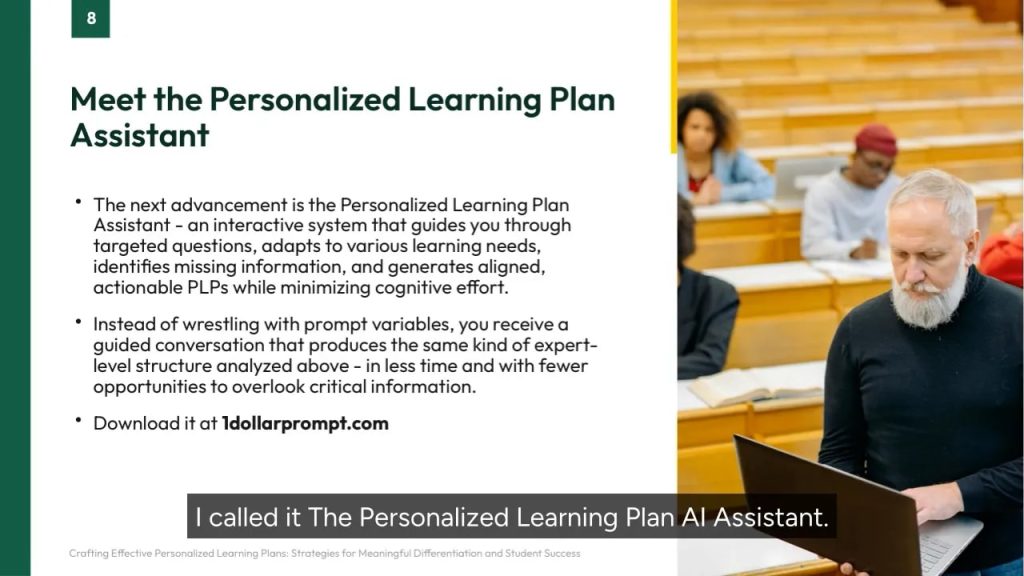
This is the promise of tools such as the Interactive Simulation & Role-Play Designer: not simply generating an activity, but supporting the reasoning required to make it workable in a real classroom.
Conclusion
Educational AI becomes more useful when prompts describe the conditions under which an answer must succeed. Define the instructional role, state the desired outcome, establish non-negotiable constraints, request step-by-step usability, and require a debrief tied to learning goals.
The fifth-grade photosynthesis case shows the value of this approach. Claude offered the strongest balance of feasibility and conceptual consolidation. Gemini expanded the science but overreached on roles and materials. Minimax offered effective facilitation language but needed correction for scientific completeness and class-size fit.
The broader lesson is simple: do not accept an AI-generated lesson because it sounds polished. Audit the roles, the materials, the time, the science, and the assessment. Better prompts create better starting points; professional judgment makes them effective learning experiences.
Frequently Asked Questions
Why is a debrief essential after a classroom simulation?
A debrief helps students connect their movements and roles to the intended concept. In the carbon-cycle example, tracing one carbon atom through plants, glucose, animals, and the atmosphere turns activity participation into scientific understanding.
What should an AI prompt include for a classroom-ready activity?
Include grade level, topic, class size, total time including setup and debrief, available materials, room constraints, participation expectations, step-by-step facilitation requirements, and a learning-focused debrief.
Can an AI-generated simulation be used without review?
No. Review the role count, material demands, timing, scientific accuracy, accessibility, and assessment plan. AI can produce a strong draft, but educators must ensure it fits their learners and instructional goals.